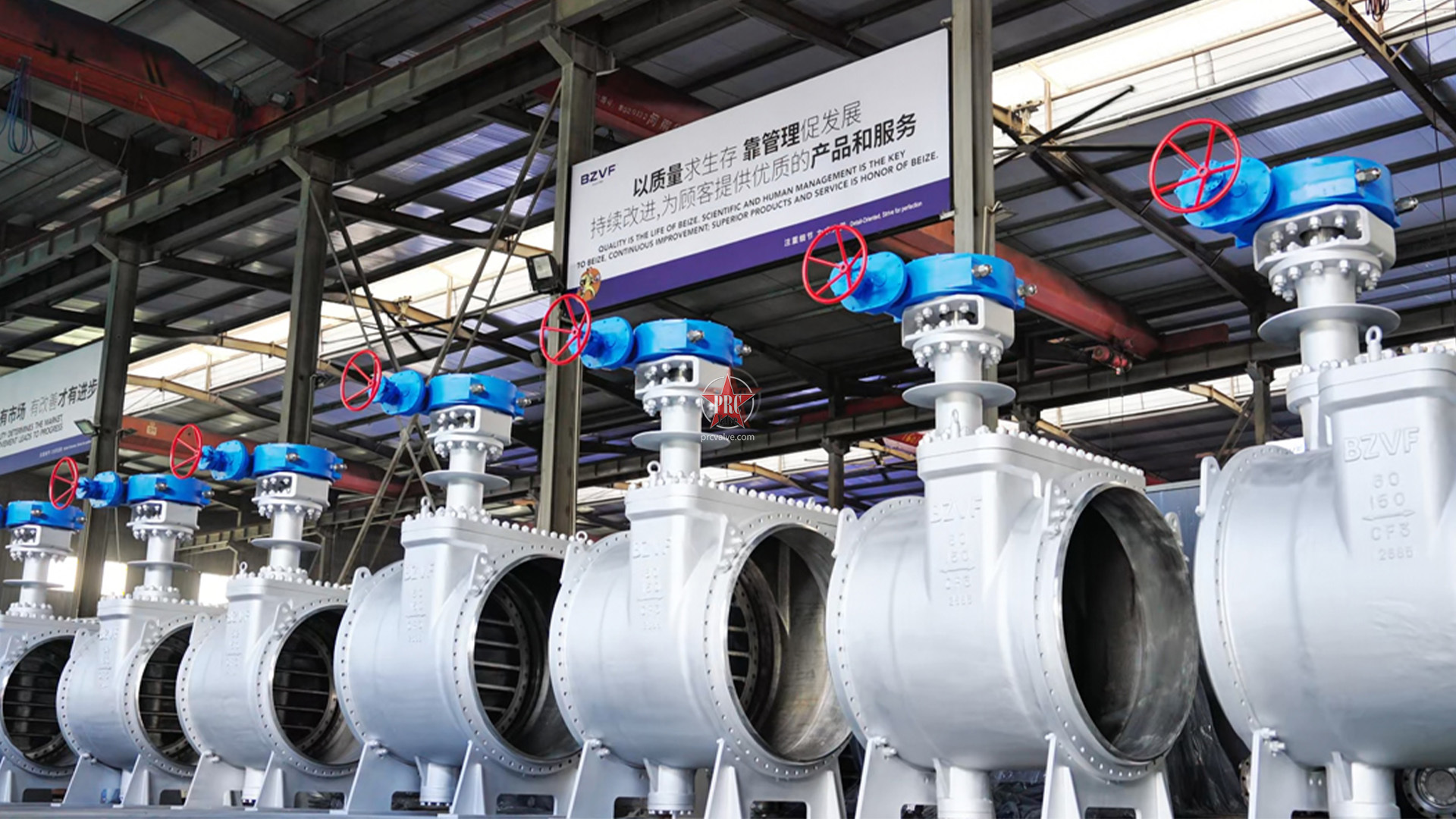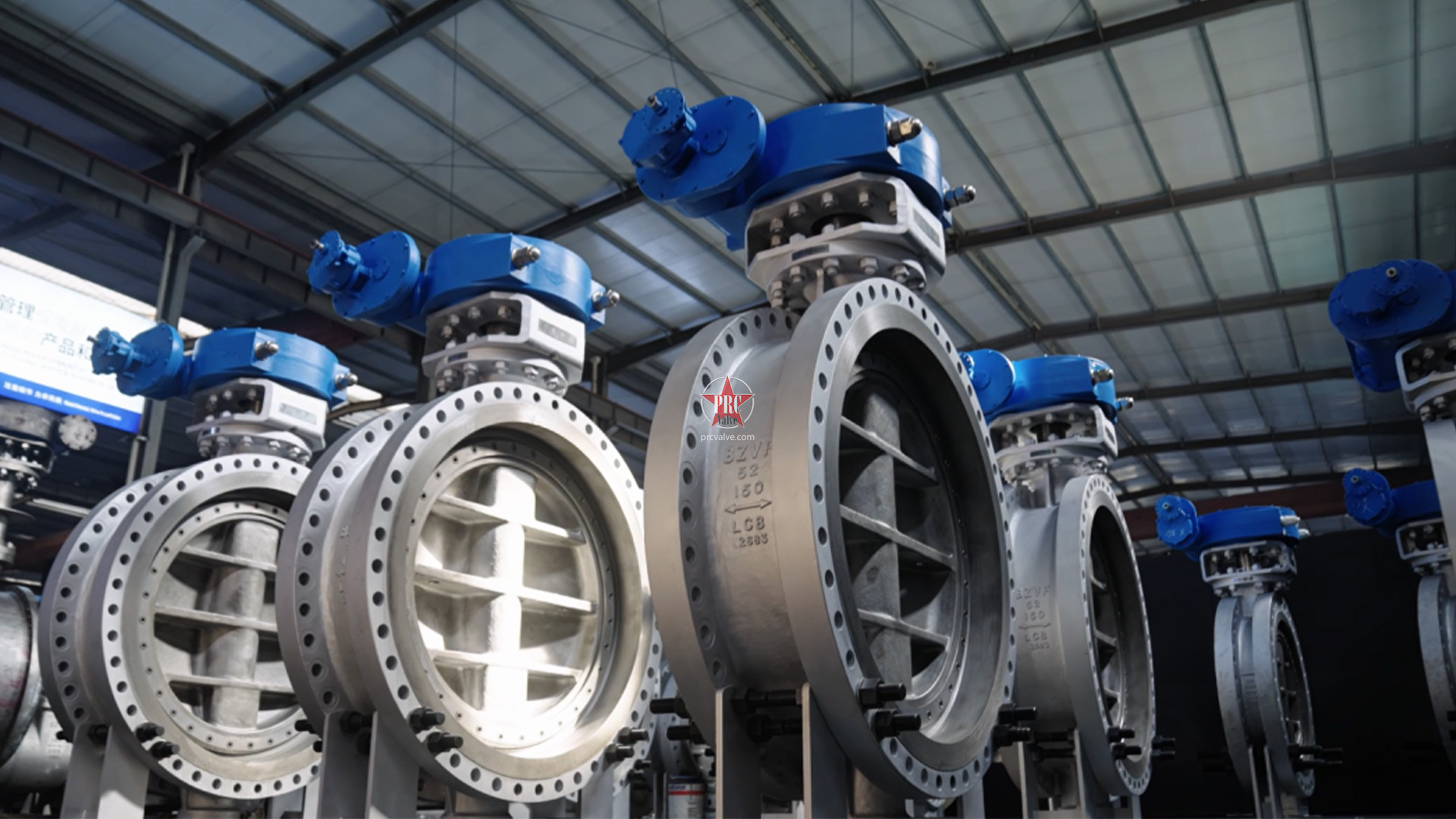

With the rapid development of industrial technology, stricter requirements have been put forward for valves, especially for butterfly valves used in low-temperature media. In addition to meeting the performance requirements of general valves, the more important thing is the reliability of butterfly valve sealing, flexibility of action, and other special requirements for low-temperature valves in low-temperature conditions. Now, based on its structural characteristics, a brief introduction will be given on its low-temperature performance.
Requirements for sealing performance of low-temperature butterfly valves:
There are two main reasons for leakage in low-temperature butterfly valves,One is internal leakage; The second is leakage.
1. Internal leakage of butterfly valve:
The main reason for internal leakage in valves is the deformation of the sealing pair at low temperatures. When the temperature of the medium drops to the point where the material undergoes a phase transition, it causes a volume change, resulting in warping and deformation of the originally high-precision sealing surface, leading to poor low-temperature sealing. We conducted a low-temperature test on the DN250 valve using liquid nitrogen (-196 ℃) as the medium, and the butterfly plate material was 1Cr18Ni9Ti (not subjected to low-temperature treatment). We found that the sealing surface had a warpage deformation of about 0.12mm, which was the main cause of internal leakage. And if the flat seal of the butterfly valve is changed to a conical seal. The valve seat is a slanted conical elliptical sealing surface, which forms a sealing pair with a perfectly circular elastic sealing ring embedded on the butterfly plate. The sealing ring can float radially inside the butterfly groove. When the valve is closed, the elastic sealing ring first contacts the short axis of the elliptical sealing surface. As the valve stem rotates, the sealing ring is gradually pushed inward, forcing the elastic ring to contact the long axis of the inclined conical surface again, ultimately resulting in the elastic sealing ring making full contact with the elliptical sealing surface. Its sealing is achieved by the deformation of the elastic ring. Therefore, when the valve body or butterfly plate deforms at low temperatures, it will be absorbed and compensated by the elastic sealing ring, and there will be no leakage or jamming phenomenon. When the valve is opened, this elastic deformation immediately disappears, and there is basically no relative friction during the opening and closing process, so the service life is long.
2. External leakage of butterfly valve:
One reason is that when the valve and pipeline are connected by flanges, leakage may occur due to the asynchronous shrinkage and relaxation of the connecting gasket, connecting bolts, and connecting components at low temperatures. Therefore, we changed the connection method between the valve body and the pipeline from flange connection to welding structure to avoid low-temperature leakage. The second is leakage at the valve stem and packing. Generally, most valves use F4 as the packing material because of its good self sliding performance, low friction coefficient (f=0.05-0.1 for steel), and unique chemical stability, making it widely used. But F4 also has its shortcomings, firstly, it has a strong tendency towards cold flow; The second reason is that the coefficient of linear expansion is large, which causes leakage due to cold shrinkage at low temperatures, resulting in a large amount of ice formation at the valve stem, leading to valve failure to open. The low-temperature butterfly valve developed for this purpose adopts a self shrinking sealing structure, which utilizes the large expansion coefficient of F4 to achieve sealing at both room temperature and low temperature through a reserved gap.
Design requirements for valve body and stem bushing of low-temperature butterfly valve:
1. The shape of the low-temperature valve housing structure. The correct selection of materials is of great significance for the normal and reliable operation of valves. Compared with globe valves and gate valves, the structural characteristics of butterfly valves not only avoid deformation caused by irregular shapes, uneven shell wall thickness, cold shrinkage at low temperatures, and temperature difference stress, but also have a small volume and symmetrical valve body shape, resulting in a small heat capacity; The consumption of pre cooling capacity is also small; The regular shape also facilitates the cold insulation measures for valves.
2. Selection of valve stem liner: Some low-temperature butterfly valves may experience sticking and biting of the rotating parts of the valve during operation, mainly due to improper material selection, insufficient reserved cold clearance, and low machining accuracy. A series of measures were taken in the development of low-temperature valves to prevent the above phenomena from occurring. SF-1 composite bearings with low friction coefficient and self-lubricating performance were selected for the upper and lower bushings of the valve stem, which can meet some special needs of low-temperature valves. Metal sealed butterfly valves have characteristics that some ordinary valves do not possess, especially low flow resistance, reliable sealing, rapid opening and closing, and long service life. The three eccentric metal sealed butterfly valve achieves sealing by the deformation of the elastic ring, so it does not need to rely on the force of the medium, and can be used for bidirectional sealing.